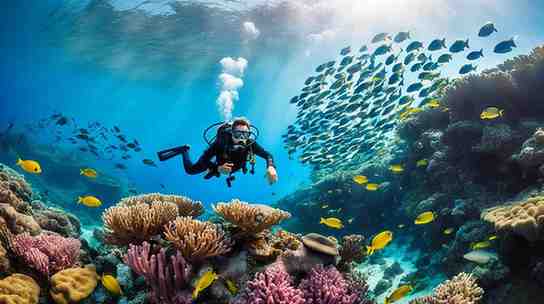
Scuba Diving in Mauritius delivers far more thrill than most expect. Beneath the surface lies a world of 430+ coral species and incredible marine diversity. Calm, protected lagoons make it perfect for beginners, while the outer reefs promise deep-water excitement for adventure seekers.
Why Geography Matters Here
That barrier reef system? Creates massive lagoons where waves barely exist. Training grounds don’t get better than this. The outer walls though—totally different stories. Dramatic drop-offs, serious currents bringing in big stuff. Water stays 22-29°C depending on the month. Visibility? Regularly hits 25-30 meters, sometimes more. Volcanic origins mean caves and canyons you won’t find at standard reef destinations.
Breaking Down Real Costs
Singles go for $50-65. Location and operator choice affect pricing. Discover Scuba programs for newbies? $80-120 gets half-day instruction plus gear. Now here’s where buying packages makes financial sense—five dives run $200-250, ten dives drop to $35-40 each. Big savings there. Full PADI Open Water certification costs $350-450, complete four-day deal. Want advanced certs? Add $250-300. Renting equipment runs $15-25 per dive. Skip hotel booking desks—go straight to dive shops and pocket 15-20% savings. Smart divers’ pair underwater time with private guided tours hitting topside attractions between dives.
Top Sites Worth Visiting
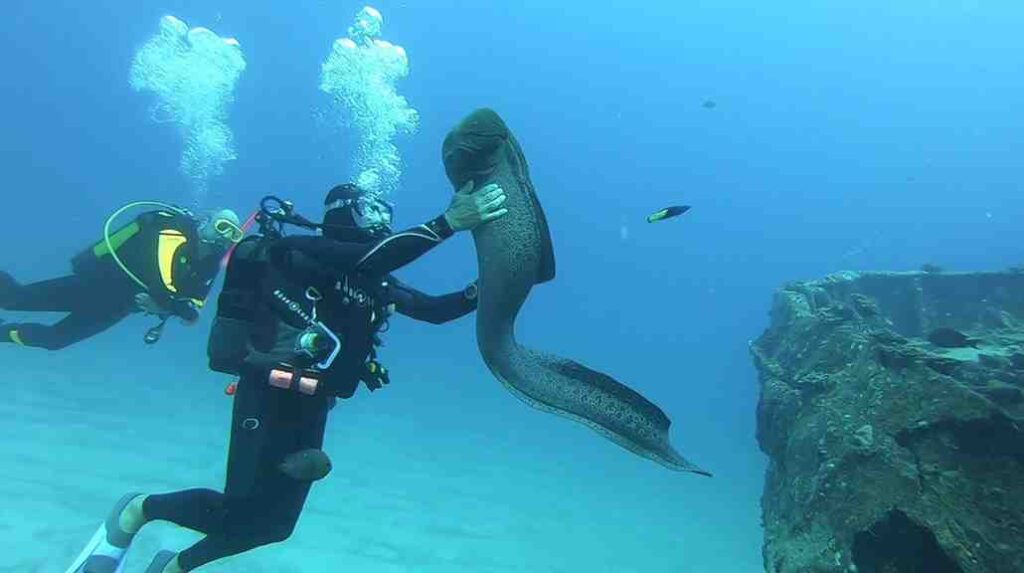
Flic en Flac dominates the scene. Fifteen sites within fifteen-minute boat rides. Cathedral’s the showstopper—care system with sunlight streaming through ceiling openings like nature’s spotlight show. Permanent groupers and snapper residents everywhere. Rempart Serpent has this winding wall absolutely packed with moray eels. Eagle rays cruise by when conditions align right. Head north to Grand Baie for bigger pelagic action. Barracuda schools, trevally hunting packs, the works. Hoi Siong wreck near Trou aux Biches sits at 25 meters, soft corals covering every surface now. Wheelhouse is still intact for penetration.
Shark Reality Check
Blacktip and whitetip reef sharks patrol edges constantly. Early morning dives almost guarantee sightings. These sharks couldn’t care less about divers—too busy hunting actual prey. Bull sharks pop up occasionally around Benitiers channels. Winter months bring hammerheads to outer areas, though that requires advanced certification for depth access. Local operators refuse baiting and feeding—keeping shark behavior natural matters here. These predators do critical work maintaining reef health through population control. Beyond sharks, check whale watching tours when humpbacks migrate through.
Seasonal Differences
Scuba Diving in Mauritius happens year-round. Conditions shift with seasons though. Summer (November-April) delivers bathwater temps at 27-29°C. Thin wetsuits or just rash guards work fine. Visibility pushes past 30 meters regularly. Trade-off? Cyclone season December-March shuts things down 2-3 days when storms pass. Winter (May-October) cools water to 22-24°C. Five-millimeter wetsuits become necessary then. Southeast winds kick up surface chops but underwater stays crystal clear. Here’s the sweet spot—September and October. Temps climbing, winds dying down, crowds thinning out. Marine activity ramps up as spring approaches too.
Getting Started as Beginner
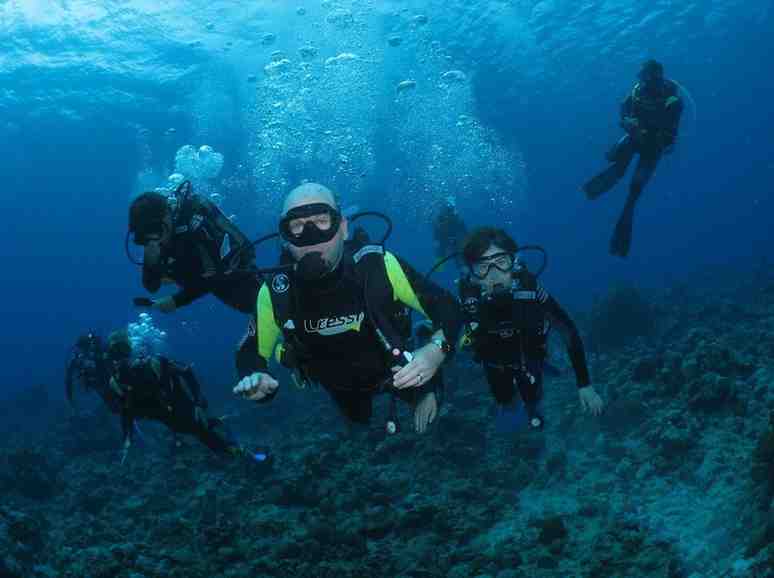
Discover Scuba takes three hours in total. Pool work covers basic mask clearing, breathing through regulators, equalizing ears properly. Then comes actual reef diving at 5-6 meters. Instructors cap groups at two students each. No exceptions. Flic en Flac and Belle Mare lagoons provide ideal conditions. Minimal current, excellent visibility, tons of fish. Success rate exceeds 95% because conditions forgive mistakes easily. Ready for full certification? PADI Open Water needs 3-4 days. Gets divers certified to 18 meters worldwide. Four open water dives build skills progressively. Families can do courses together with over 10 qualifications. After certification, consider honeymoon tour packages mixing diving with romance.
Where Sites Cluster
West coast Flic en Flac to Tamarin packs 25+ named locations within ten kilometers. Southeast winds don’t hit this area—diving runs reliably year-round. Northern Grand Baie region counts fifteen major sites. Generally deeper, needing longer boat transfers. Winter winds affect north more but fewer divers mean pristine coral. East coast Belle Mare and Trou d’Eau Douce access 8-10 spots. Ocean swells push through reef gaps here, limiting operational days but guaranteeing uncrowded experiences. South coast? Handfuls of operators deal with rough conditions constantly. Payoff comes as untouched reefs and rare species nobody else sees.
Choosing Solid Operators
PADI 5-Star or SSI Diamond certifications matter. These require meeting audited safety standards annually. Check equipment condition first visit. Beat-up gear signals corner-cutting operations. Read recent reviews focusing on safety specifics—thorough briefings, conservative profiles, proper emergency equipment. Group size impacts experience massively. Four to six divers per guide beats operations cramming 15+ people per boat. Boat facilities matter on full days—shade, freshwater showers, camera rinse stations make hours at sea comfortable. Similar selection logic appears in private vs group tours comparison guide.
Package Math
Multi-dive packages slash per-dive costs hard. Ten-dive deals run $350-400, saving roughly $150 versus individual purchases. Resort packages? Usually 20-30% pricier than independent shops offering free pickup anyway. Full-day excursions bundling 3-4 dives with lunch go $120-150 per person. Week packages combining certification, hotel stays, and bonus dives range $800-1200 depending on accommodation standards. Couples booking together typically score 10-15% discounts. Premium experiences match well with luxury tour options blending upscale diving and exclusive activities.
What Reviews Show
Feedback patterns highlight relaxed conditions versus high-current spots elsewhere. Photographers love stable water for shot composition without fighting movement. First-timers mention confidence building through patient teaching in forgiving environments. Negative reviews? Overcrowded boats peak season or rushed briefings at budget outfits. Both avoidable through research and shoulder season booking. Photographers typically rate Mauritius 4-4.5 stars. Missing massive pelagic but healthy carols and reliable visibility delivers consistent reef photography opportunities.
Shop Locations
About forty PADI and SSI certified centers operate island-wide currently. Flic en Flac alone supports 15+ shops on its western shore. Blue Water Diving Center, Exploration Sous-Marine, Villas Caroline Diving Center—all long-running operations with solid safety records. Northern options include Dive Dream Mauritius serving Grand Baie. East coast has Ocean Spirit Diving and Oceane Diving Center in Belle Mare. Most run 8 AM-4 PM daily. Morning two-tanks, afternoon singles. Night dives 6-7:30 PM show nocturnal behaviors—hunting morays, sleeping parrotfish. Walk-ins accepted but booking 2-3 days ahead guarantees gear and boat space. Peak times December-January and July-August need reservations. Contact planning experts for customized itinerary help.
Gear Rental Facts
Every center stock rental basic. BCDs, regulators, wetsuits, masks, fins, computers. Sizes run XS through XXL at most places. Extreme sizes need advance confirmation though. Serious divers benefit bringing personal regulators and computers. Rental BCDs function fine, but familiar breathing equipment matters. Airlines usually permit one dive gear piece as extra baggage. Camera rentals cost $25-40 per dive for action cams or basic models. Advanced photographers need personal systems, DSLR or mirrorless housing rarely available for rent. Computers come, including most packages, beat using tables hands down. Before committing fully to Scuba Diving in Mauritius, snorkeling tours provide low-risk marine life sampling.
Conservation Work
Mauritius protects roughly 40% of territorial waters through marine parks and fishing restrictions. Blue Bay Marine Park demonstrates conservation success. Healthy corals, robust fish populations prove regulations function properly. Operators participate in monthly reef monitoring, submitting condition reports to authorities. Most organize cleanup dives regularly removing abandoned fishing lines and plastic waste. Every briefing stress is responsible for practice. No coral touching. Neutral buoyancy prevents fin damage. No fish feeding. Some operator’s fine divers for coral contact or wildlife harassment. Climate change poses biggest long-term risk. Rising temps trigger minor bleaching events but recovery stays strong thanks to fish controlling algae growth.
Beyond Traditional Diving
The underwater walk experience uses specialized helmets enabling normal breathing while walking seafloor depths. Perfect for people wanting more than snorkeling without scuba commitment. The famous underwater waterfall illusion creates stunning visuals from aerial perspectives. Diving there prohibited though—extreme depths, dangerous currents. Helicopters give best viewing angles for this phenomenon. Tourist submarines drop to 35 meters along outer walls through large windows, showing deeper species without certification needs.
Safety Standards
All certified operators carry oxygen, first aid supplies, and communication gear every trip. Nearest hyperbaric chamber located in Port Louis, roughly 45 minutes from most sites. Medical questionnaires flag conditions preventing safe diving—heart problems, respiratory issues, certain medications. Honest disclosure matters critically for safety. Never dive with colds or sinus congestion. Equalization problems cause real injuries. Postpone until fully recovered. Dive insurance recommended strongly. DAN coverage runs about $100 yearly, covers hyperbaric treatment potentially costing $5,000+ otherwise. Standard travel insurance frequently excludes diving. Never solo dive regardless of certification. Buddy systems literally save lives regularly. For activity planning balancing adventure with safety properly, contact specialists for tailored itineraries.
Photography Pointers
Visibility and natural light work excellently for underwater photography here. Wide-angle lenses (10-17mm) handle reef scenes and wall formations best. Macro photography requires 60-105mm lenses capturing tiny subjects—nudibranchs, shrimp, juvenile fish. Natural light functions well 5-15 meters during midday. Deeper dives or cloudy days need strobes restoring color wavelengths. Some centers offer photographer-focused trips. Slower pacing, extended bottom times, groups limited to 3-4 divers maximum. Always shoot RAW format—allows extensive post-processing for white balance and exposure corrections without quality loss.
Price Comparison Table
| Package Type | Cost Range | Best For |
| Single Dive | $50-65 | Trial runs |
| Discover Scuba | $80-120 | First attempts |
| 5-Dive Package | $200-250 | Quick trips |
| 10-Dive Package | $350-400 | Week stays |
| Open Water Cert | $350-450 | Getting certified |
| Specialty Cert | $250-300 | Skill expansion |
| Equipment Rental | $15-25/dive | Traveling light |
| Camera Rental | $25-40/dive | Memory capture |
Frequently Asked Questions
Why pick Scuba Diving in Mauritius over alternatives?
Year-round warmth, 25–30-meter visibility, diverse ecosystems distinguish it. Volcanic geology produces unique formations. Conservation maintains healthier reefs than most tropical locations.
What covers the one-week diving budget?
$400-600 covers 10-12 dives. Add lodging ($50-200 nightly), meals ($30-60 daily), transport ($20-40 daily). Week trips run $1,500-2,500 minus flights.
Can total novices dive safely?
Absolutely calm lagoons eliminate currents. Instructors keep 2:1 ratio. Over 95% finish first dives successfully annually.
Which coast delivers best experiences?
West coast near Flic en Flac. Twenty-plus sites minutes away, wind protection year-round ensures consistent access.
What does marine life show up regularly?
Hundreds of reef fish—parrotfish, angelfish, butterflyfish. Barracuda and trevally patrol edges. Turtles appear most dives. Reef sharks are common but harmless.
Does cyclone season prevent diving?
No—continues December-March with brief 2–3-day interruptions during storms. Operators cancel when unsafe. Temps peak 28-29°C, visibility tops 30 meters.
Do premium sites require advanced certs?
Most suit Open Water divers (18-meter limit). Some wrecks and walls need Advanced (30-meter limit). Shallow spots 8-12 meters still offer excellent diving.
Mauritius delivers serious underwater exploration through 40+ documented sites. Protected lagoons work for training. Outer reefs challenge experienced divers hard. Operators maintain strict safety standards using modern equipment and training staff. Book ahead securing prime site access and gear for chosen dates.
Pingback: Undersea Waterfall in Mauritius: Exclusive Ways to Experience This 2025 Natural Wonder
Pingback: Dive Mauritius: A Feature Guide to Underwater Magic in the Indian Ocean – SUALTI Gazetesi
Pingback: Mauritius Adventure Tour Package: Your Complete 2025 Guide to Island Thrills & Unforgettable Experiences